Dr Craig Steven Wright · Researcher, founder & author

How complex
systems hold
together.

I build research organisations and programmes that connect technical systems with the economic, legal and human conditions in which they operate. My work combines doctoral training across economics, law and computer science with the experience of founding companies and leading international research teams.

Connected programmes. Substantive research.Supply chains · Governance · Innovation · Systems

Research stories

When the answer arrives,
the learning need not stop.

A backup has protected the customer. Should a slow AI computation still be paid to finish? A research story about the value of evidence, the cost of learning and the contracts that connect them.

Operations · AI · Contract design

Read the AI procurement story

Bytes, not boxes
Product design, scarce components and the storage customers need

Buying time to create competition
How demand flexibility changes usable LNG supply options

Explore all research stories

01 / Research programmes

Different fields.
Substantive questions.

My research is organised around problems: resilience in supply networks, the exercise of authority, the economics of new capabilities and the structures through which we explain behaviour.

Each programme has its own questions and methods. Their connections create opportunities for joint projects, shared methodological work and sustained inquiry across departments and research groups.

01Supply chains & operationsWhat makes a supply chain resilient?

This programme studies how sourcing choices, transport routes, capacity commitments and information interact under disruption. It follows the dependence hidden behind apparently different suppliers, the constraints on contingency capacity and the decisions that turn alternatives into usable options.

The practical concern is how to evaluate resilience before a shortfall, across trade networks, energy procurement, nearshoring and critical-mineral supply.

02Governance, law & accountabilityWho controls the rules?

Voting procedures, delegated authority and the separation of duties leave a deeper question: who can change the conditions under which decisions are made? My research examines configuration authority, coalition influence and the relationship between operational control and legal responsibility.

It connects institutional design with accounting, finance and private law, asking how the structure of a system creates duties, distributes authority and exposes participants to risk.

03Economics, AI & innovationWho benefits from a new capability?

New technology changes the range of things people and organisations can do. Access, price and institutional judgment affect which of those possibilities can be realised. This programme examines unequal access to AI, the evaluation of radical innovation and the economic conditions surrounding adoption.

It brings questions of productivity and opportunity together with a difficult problem for innovation: how to assess a capability that challenges the standards used to judge it.

04Blockchain & TechnologyWhat makes scale operationally credible?

This programme examines blockchain and the wider technologies that support digital infrastructure. It brings together distributed systems, cryptographic verification, computation, storage and incentives, with research on consensus, network propagation, scaling and digital payments.

The central question is how technical capabilities become dependable systems. The work connects architectural choices to resource constraints, transaction costs, coordination and the practical demands of reliable operation at scale.

05Digital ScarcityWhat does it mean to give up a digital thing?

A file can be copied without leaving its sender. A transferable digital good presents a harder question: can the recipient acquire exclusive effective control while the sender loses the ability to exercise that same control? This programme makes the distinction between information, access and possession its starting point.

The research brings property theory, economics and security engineering together. It examines attested extinguishment of a sender’s control state, the incentives of those who attest to a transfer, and the allocation of responsibility when retained access or hidden copies cannot be ruled out.

Its scope is precise: demonstrable divestment within a stated system and trust boundary. An attestation does not establish that every external copy of information has vanished. The challenge is to identify what is actually scarce, what can be verified and which residual risks require economic incentives or legal accountability.

This is a distinct research programme from Teranode and transaction scaling. Its central concern is the integrity and meaning of possession and transfer, with potential applications to digital goods, transferable access and controlled-use capabilities.
06Mathematics & formal methodsWhat can a model establish?

The mathematical programme examines graph structures, operators, probability and formal methods. It is concerned with the relationship between a representation, the assumptions it encodes and the conclusions that can legitimately be drawn from it.

This provides a formal counterpart to the applied programmes: making structures explicit, distinguishing different kinds of dependence and developing methods that can be extended to new problems.

07History & economic institutionsHow did trust become an institution?

Money, debt and credit reveal how people coordinate long before modern financial systems. My historical research examines commercial and institutional arrangements, including credit and obligation in medieval and early modern London.

It asks how lending, enforcement and reputation organised exchange, and how changes in those arrangements altered the possibilities for trade and cooperation.

08Psychology & human judgmentHow do beliefs and social environments shape behaviour?

This programme explores belief, trait expression and social influence, including behaviour in financial and online communities. Psychological measurement is central: what a response captures, how a construct is defined and how context affects interpretation.

The research connects questions about individual judgment with the social settings in which beliefs are expressed, reinforced and acted upon.

09Physical theory & information geometryHow does a microscopic description become a macroscopic one?

My work in mathematical physics uses geometry to investigate physical descriptions and their approximations. Research in relativistic kinetic theory examines the transition towards hydrodynamics through the structure of the space of possible states.

The published moment-manifold work gives this question a concrete setting: a Fisher–Rao geometry within a specified kinetic-theory model, with explicitly stated assumptions.

02 / Institutional collaboration

Shared questions.
Distinct expertise.

An agenda for interdisciplinary chairs, research professorships and long-term university partnerships: build programmes that unite specialist teams around consequential questions, competitive grant proposals and research that can withstand scrutiny.

01

Resilient trade and energy networks

Connect supply-chain analysis, computation and institutional economics to investigate when alternative suppliers, routes and capacity provide usable contingency options.

Possible joint work: comparative network studies, disruption scenarios and decision-support methods.

02

Accountable digital institutions

Bring governance, law, accounting and computer science together to examine where authority sits, how decisions are evidenced and which duties attach to control.

Possible joint work: comparative governance studies, formal control models and methods for evaluating institutional design.

03

AI access, adoption and evaluation

Combine economics, psychology and technical analysis to study who can use new capabilities, how their value is judged and what changes in opportunity and productivity follow.

Possible joint work: access comparisons, adoption studies and evaluation frameworks for unfamiliar technologies.

04

Digital possession and transferable control

Connect property scholarship, mechanism design and systems security to investigate when a digital transfer genuinely divests the sender, what an attestation establishes and how residual custody risk should be governed.

Possible joint work: formal models of control, adversarial testing of transfer mechanisms and comparative analysis of rights and liability.

Published work

Breadth with a research record.

The portfolio includes published work in economics, engineering, law and physics, alongside three books developing questions of governance, political order and ethics.

03 / Books

The arguments
behind the institutions.

Three books develop the questions of power, obligation and purposeful action at greater length.

Law & governance · Ethics Press, 2026

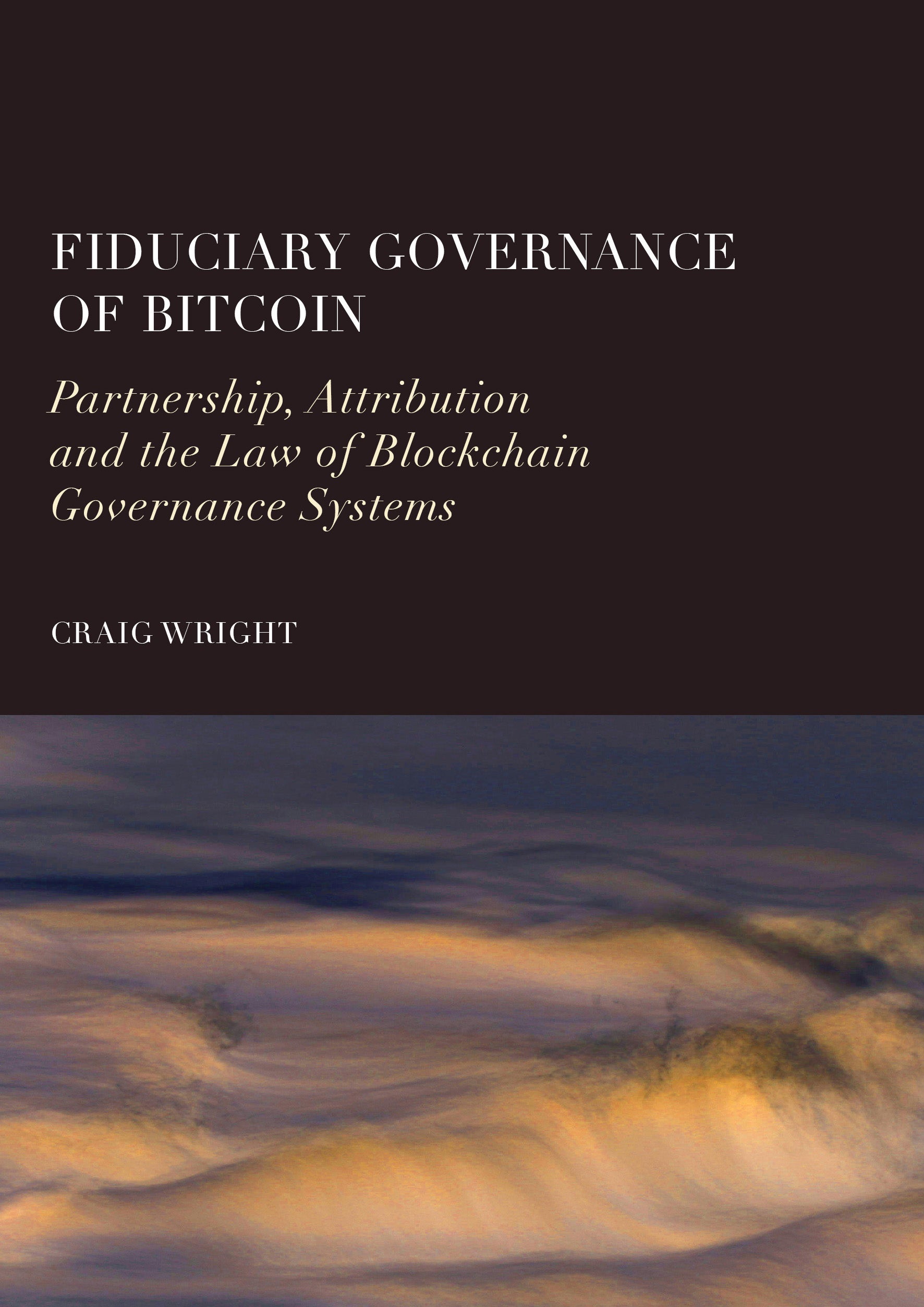
Fiduciary Governance of Bitcoin

Where control exists, what duties follow?

A private-law account of blockchain governance that asks how partnership, attribution and fiduciary responsibility apply to the people shaping a protocol.

Explore the book

Political philosophy · Ethics Press, 2026

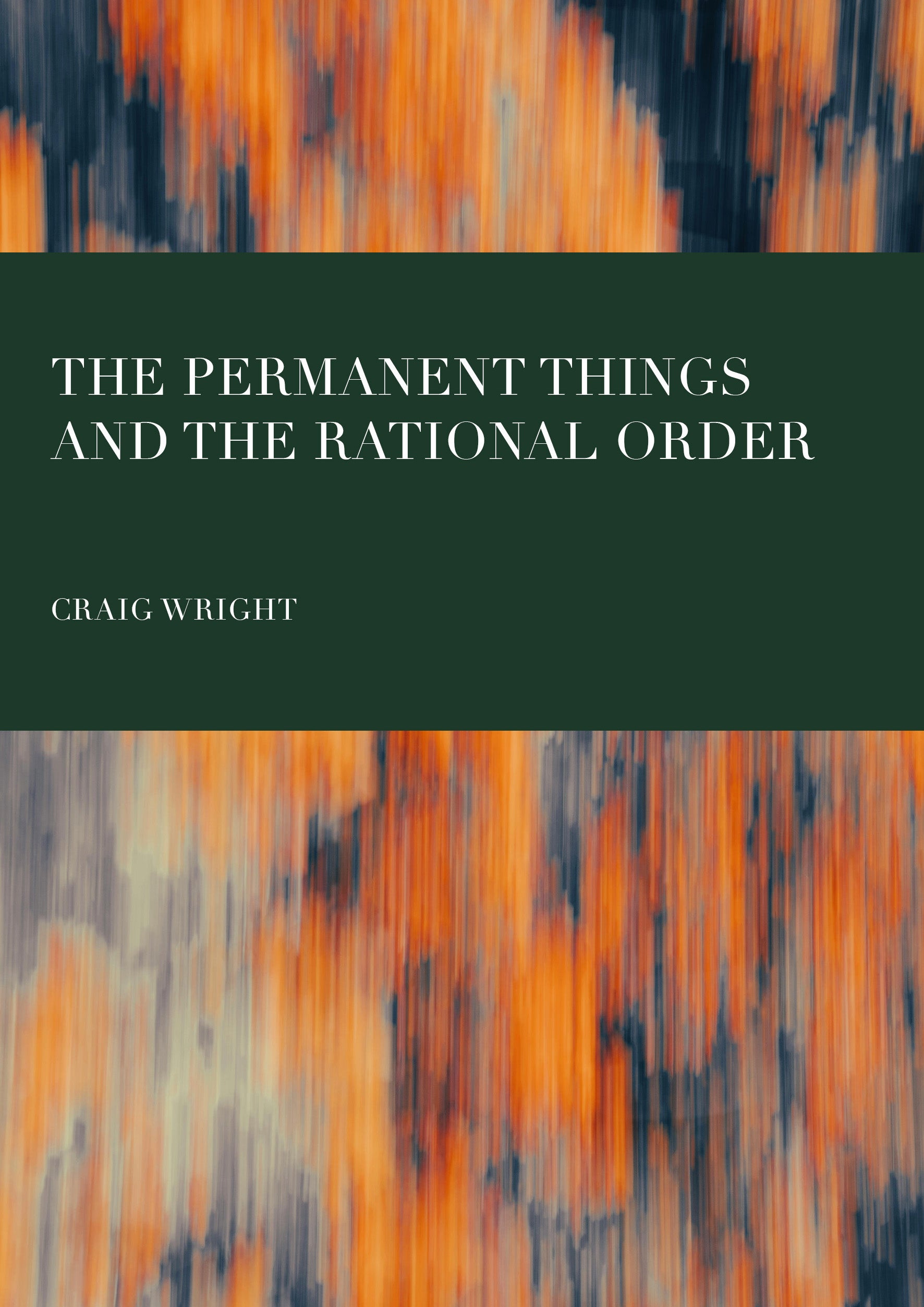
The Permanent Things and the Rational Order

What gives constitutional order its foundation?

An argument about the principles that sustain limited government and individual liberty, placing natural law at the centre of institutional judgment.

Explore the book

Philosophy & ethics · Ethics Press, 2026

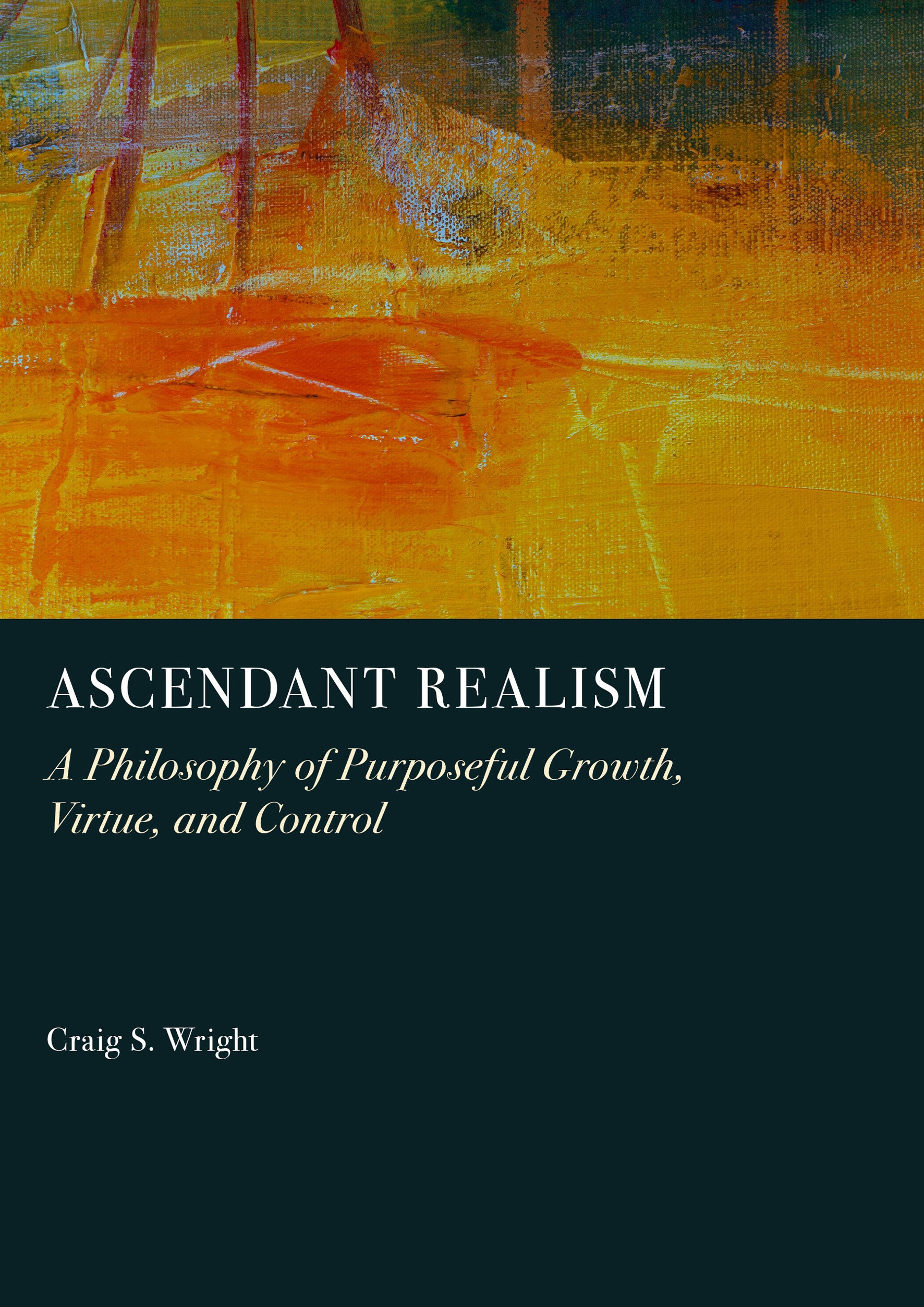
Ascendant Realism

How should an account of reality guide action?

A philosophical framework connecting realism, virtue and purposeful growth with the choices through which individuals and institutions shape their future.

Explore the book

04 / Profile & leadership

Dr Craig
Steven Wright

An interdisciplinary scholar with the experience to build the organisation around the research.

I founded DeMorgan and nChain, building research organisations from their inception and developing international programmes in machine learning, cryptography, distributed systems and secure computation. At nChain, I grew the research team to more than 100 researchers across six countries, within a company that reached more than 300 people.

My leadership work has included setting research priorities, making portfolio decisions, recruiting specialist teams and developing researchers into independent leads. Giving managers and technical leads genuine responsibility enabled programmes to progress internationally in parallel.

I am seeking a chaired or tenured university role in which that experience can support sustained interdisciplinary research, doctoral development and programme building. My contribution is to connect ambitious questions with the people, methods and institutional structure needed to pursue them.

Building research capacity

From a research question
to an enduring programme.

University leadership requires more than a collection of interests. It needs a coherent agenda, capable researchers and a structure that makes progress visible.

Programme development

Build the academic platform

I established and ran the master’s programme in digital forensics and information security at Charles Sturt University from 2001 to 2006. That experience connects curriculum development and postgraduate teaching with the practical demands of building a research team.

Researcher development

Develop independent leaders

My mentoring has supported PhD graduates, former academics and engineers as they move from a promising question to formal specification, critical evaluation and independent research leadership.

University & foundation partnerships

Shape fundable programmes

I seek partnerships to develop competitive research-grant proposals with clear work packages, complementary expertise, reproducible methods and meaningful outputs. The aim is a programme capable of supporting doctoral projects and a durable research group.

Qualifications

Depth across disciplines.

Three research PhDs, professional doctorates in business and public administration, and postgraduate study spanning quantitative methods, social science and the humanities.

Completed research doctorates

Economics, law & computing

  • PhD in EconomicsUniversity of Exeter
  • PhD in LawUniversity of Leicester
  • PhD in Computer ScienceCharles Sturt University

Completed professional doctorates

Business & administration

  • Doctor of Business AdministrationInternational Business · Geneva Business School
  • Doctor of Public AdministrationWalden University, USA

Selected master’s qualifications

Methods & perspective

  • Master of StatisticsUniversity of Newcastle
  • MSc in Quantitative FinanceUniversity of London
  • MSc in PsychologyArden University
  • MA in HistoryUniversity of Birmingham

Current doctoral research

Judgment, money
and institutional trust.

Ongoing doctoral research in psychology and economic history extends my work on incentives and institutions into human judgment and the historical arrangements that sustain exchange.

Liberty University · In progress

Psychology

Conditional trait expression and social influence bring human judgment into focus: how source credibility, prior beliefs and incentives affect evaluation, information selection, resource commitment and communication.

Birkbeck, University of London · In progress

Economic history

Research on money, credit and trust in London, c. 1340–1560, examines the legal and commercial arrangements that sustained exchange under monetary stress, through archival and computational inquiry.

These perspectives connect formal incentives to human responses and to the institutions through which cooperation becomes durable. My training in political science and geography adds questions of authority, jurisdiction, place and network structure to that account.